What is an OTA in tourism, and what it brings a tour operator
What is an OTA in tourism, what it brings a tour operator and what it costs. And how to organise bookings once they arrive from several channels at once.
Contents
A traveller arrives in Rome, opens an app on their phone and books a Vatican Museums tour for the next day. That app may well be an OTA. For an incoming tour operator it is one of the sales channels, and it pays to know it well: what is an OTA in tourism, what it brings, what it costs and what work it leaves after the sale.
What is an OTA in tourism
OTA stands for Online Travel Agency. It is a digital platform where travellers search, compare and book hotels, flights, tours and experiences. It works as an intermediary: it brings you the customer and keeps a commission on every sale.
In tours, OTAs include for example Viator, GetYourGuide, Klook and Civitatis, some of the channels Bókun lists among those connected to its channel manager.
Alongside OTAs there are direct sales, from the company’s own website, and resellers such as agencies and hotels. Bókun says it connects tour operators to more than 2,600 OTAs and resellers.
What OTAs bring a tour operator
The main advantages of listing on an OTA:
- Visibility. Your tours are shown to travellers from all over the world who are already looking for things to do at your destination. Viator, for example, speaks of millions of weekly visitors to its website.
- Easy purchase. The customer books in a few steps, on a platform they already know.
- Trust. Many travellers feel safer booking on a platform they know, where they can read other customers’ reviews.
- Shop-window effect. A customer can discover you on the platform and then look for you directly for their next tour.
- Ready-made tools. The listing, calendar, payment and reviews come with the platform: you don’t have to build them.
- Extra demand. One more channel can help you fill empty seats, in the low season too.
Working with OTAs means giving up a commission in exchange for customers you would struggle to reach on your own. Whether the trade-off pays depends on your tours and your margins.
The price: commission and the channel’s rules
Commission is the most visible cost. Then there are the rules each OTA uses to sort its search results, which decide how much your tour sells.
GetYourGuide writes that it ranks activities by popularity, customer ratings, performance, availability, diversity and revenue, including supplier commissions, and that rankings come with no guaranteed positions. We covered this in our article on how to improve your ranking on GetYourGuide.
Viator says something similar: commission is one of many factors that may affect a product’s position, alongside reviews, rating, price and availability, and how recent the reviews are counts too. The details are in our article on what Viator’s algorithm looks at.
On an OTA, then, the service on the ground matters as much as the listing: the review comes after the tour.
More channels, more bookings to organise
Once bookings start coming in from several channels at once, the real bottleneck appears: guides, availability and passenger lists scattered across platforms, emails and spreadsheets.
The first problem is availability: if the same seat sells on two channels, you risk a double booking. A channel manager like Bókun is there for that: it syncs bookings across platforms and automatically updates availability on all sales channels.
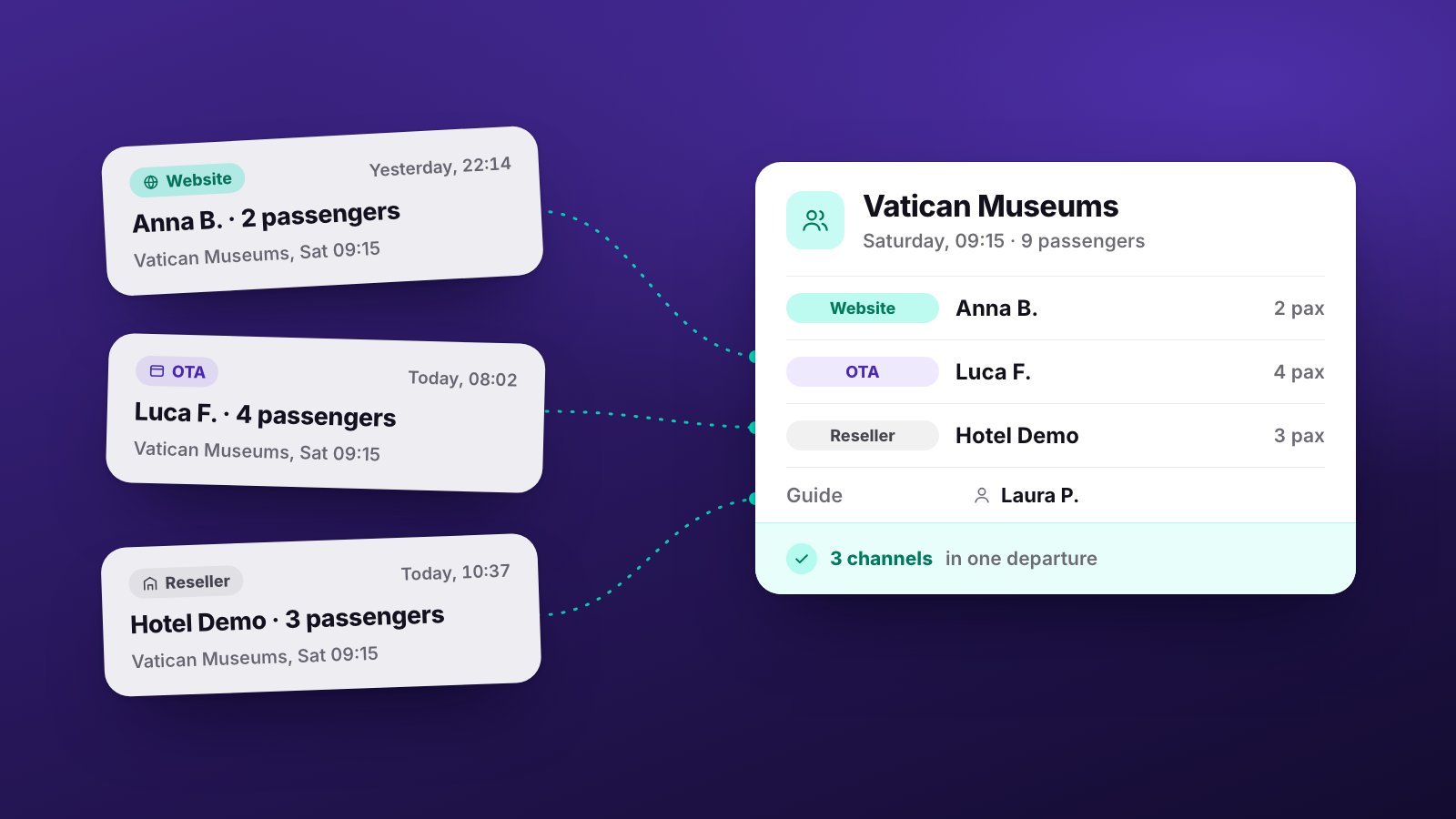
The second comes after the sale. Bookings for the same tour, from different channels, have to become one group, with a guide, a meeting point and a list of names. That is where TourOperate works. It connects to Bókun, and every booking that reaches Bókun, from whichever channel, links itself to its departure: the tour on that day at that time.
- Who sold what. For every booking you see the reference, the lead customer, the phone number, the email and the seller.
- Channels side by side. The sales report shows what you sold and through which channels, each marked as direct, reseller or OTA, and the net, meaning what each seller owes you after their commission.
- One email a day. Each staff member can receive a single email with their day. Partners, the companies that supply you with vehicles, drivers or guides, receive one email a day with all their services, the passengers’ names and the customers’ contact details.
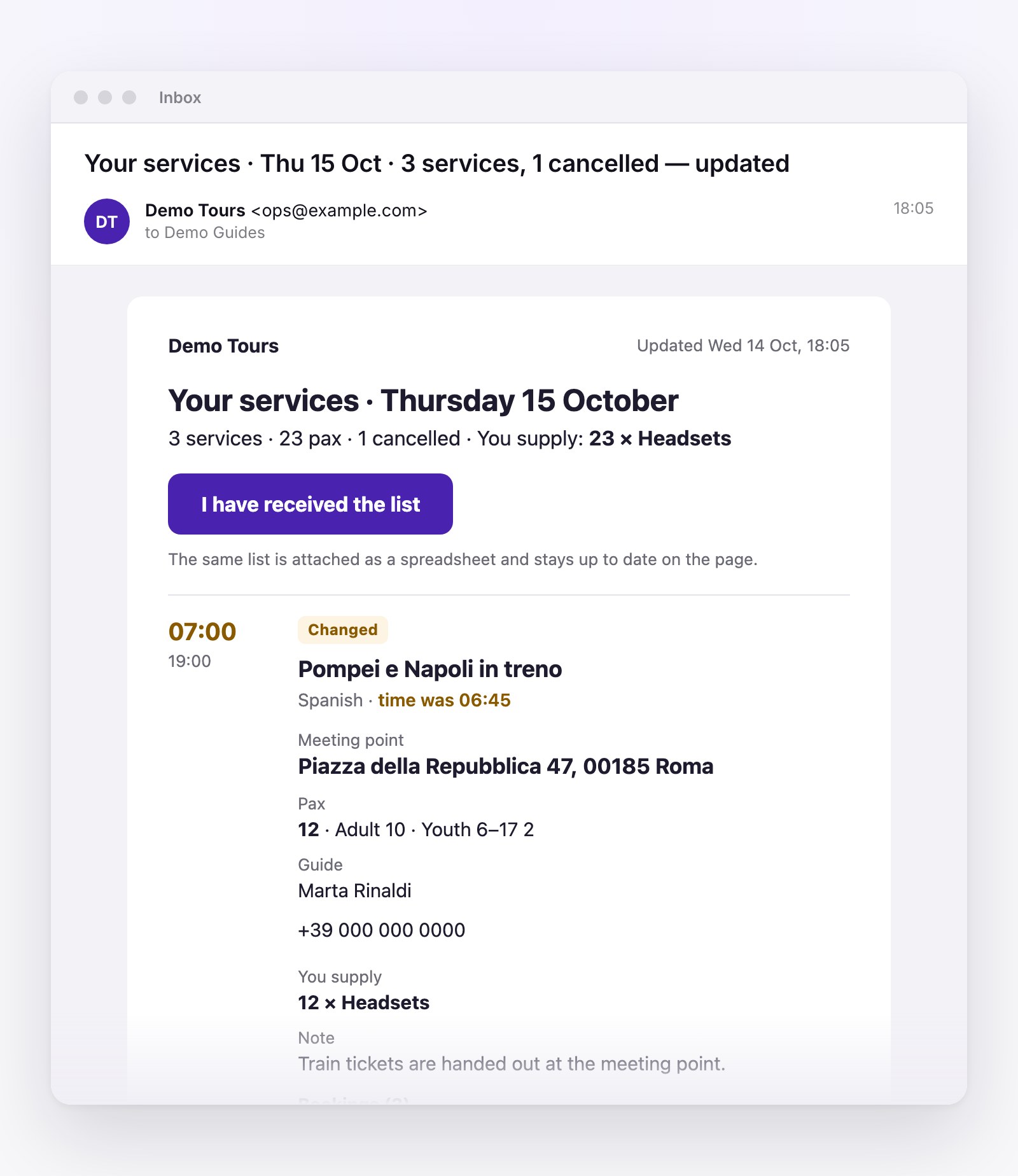
OTAs bring the customers; organising them is still the tour operator’s job. With the bookings from every channel in one place, you can spend fewer hours copying data and more on a service customers want to book again, which on an OTA becomes the next review. The full flow, from the booking to the email of the day, is in How it works.
Sources
- Bókun, Bókun: Booking Management Software for Tour & Activity Providers, accessed 23 October 2026.
- GetYourGuide, How ranking works on GetYourGuide, Supply Partner Help Center, updated 8 April 2026, accessed 23 October 2026.
- GetYourGuide, ranking note on its destination pages, for example Rome, accessed 23 October 2026.
- Viator, Understanding how ranking and sort work on Viator, accessed 23 October 2026.
Organise your days with TourOperate
Try it free